We use cookies on this site to enhance your experience.
By selecting “Accept” and continuing to use this website, you consent to the use of cookies.

A Parkinson’s diagnosis can be overwhelming, but for Lloyd Taylor (BA ’90), it has become an unexpected doorway into connection, purpose and resilience. In the years since learning he had the disease, Taylor has found strength in community, discovered the transformative power of movement, and joined a cross-country cycling effort determined to bring hope to others.
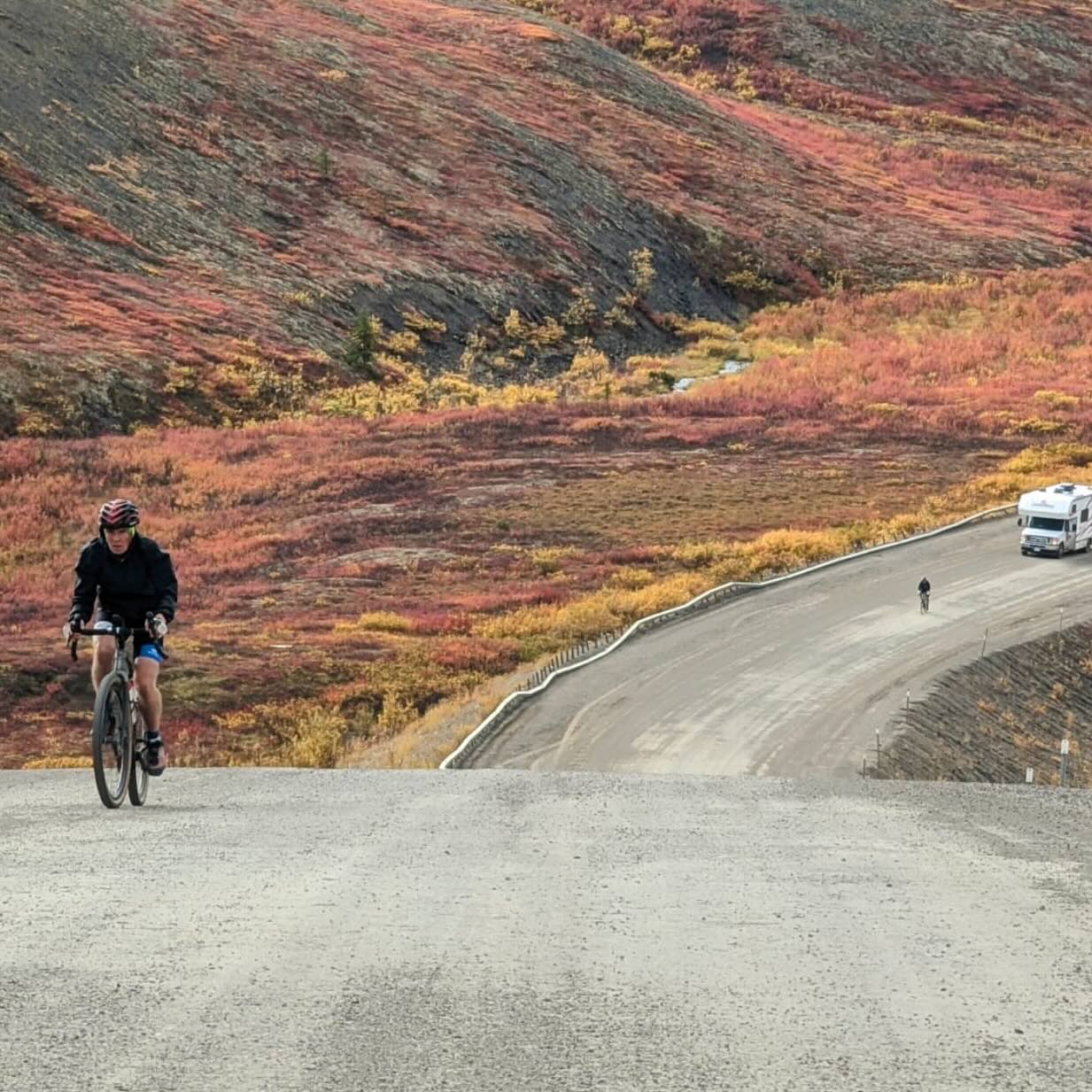
Through the Spinning Wheels Tour, which is a nationwide initiative that encourages people living with Parkinson’s to “get moving to stay moving,” Taylor has met remarkable people, travelled extraordinary distances and become a passionate advocate for the life-changing impact of exercise and support.
His experience at Laurier, where community and belonging shaped his early years, helped prepare him for the leadership, collaboration and compassion that now guide his work on the Tour. It’s a foundation he continues to draw on—especially as his own son, Callum, carries the Laurier legacy forward.
We caught up with this proud Laurier alumnus to ask him a few questions:
My first instinct after receiving my diagnosis was to hide. My wife and I agreed we would tell no one. Thankfully my wife can't keep a secret. She confided in a friend whose sister’s husband had Parkinson's and was a member of the Rigid Riders, a Parkinson's cycling group in Toronto. They reached out to me and I did everything I could to avoid meeting them. I just wasn't ready to accept the truth. Eventually I agreed to ride one day with them in Halifax as they were crossing the country and when I got on the bike my symptoms disappeared. I planned to ride one day and I ended up riding three weeks until we reached Saint John's Newfoundland. Now I'm motivated to continue to improve my own health but more than anything to spread the message that exercise, and cycling in particular, can reduce the symptoms of Parkinson's.
The most memorable days are the days we meet someone who needs to hear our message. It can happen in the most unlikely of places. I was part of the team that rode to the Arctic Ocean. We stopped in a place called Eagle Plains, population nine, that sits just 35 km from the Arctic Circle. There is only one building in town and when we went in, we met a man who had just been diagnosed and had no one to speak to. We spent two hours talking about his diagnosis and his options. We had cycled thousands of kilometers to be what seemed the middle of nowhere that day and it turned out to be exactly where we needed to be.
Parkinson's is a disease that causes people to stop moving. It encourages people to curl up in a ball and surrender. There are physical symptoms that literally make the body unable to move. There are cognitive symptoms that sap the desire to fight back. When your mind and body both give up it is difficult to stop the degenerative effects of the disease. It is imperative to keep moving. I have seen a reduction in the symptoms of so many people when they begin to ride a bike. Sadly, the disease is relentless and it progresses even in the face of exercise, but exercise and community can slow the pace. In some cases they can even reverse the effects.
Spinning Wheels started with four people. This past year it grew to over 300. There are more than 100,000 people living with this disease in Canada and I would like all of them to hear this message. No matter what stage someone is at, they can benefit from exercise and community. We are reaching out to every corner of the country. We are riding our bikes from coast to coast to coast. From the Rocky Mountains to the Newfoundland coves to the frozen tundra of the Arctic Circle. A documentary is being filmed about the movement and I have written a book, The Kindness of Strangers, as a tribute to the people we've met. All of these efforts contribute to spreading the message. There is no cure for this disease but there is hope.
Laurier was one of the first places I experienced community. As a small campus, it was possible to know the people you were passing in the halls. It was possible to know the professors who were standing at the head of the lecture hall. Laurier for me was a safe place to learn and grow and prepare for the future. My son Callum is in fourth-year Communications at Laurier now. He handled communications, logistics, media, social media, promotions, events and sponsors for the Tour. It was a daily juggling act that allowed the cyclists to focus on riding, knowing that everything else would be taken care of. People complimented me everyday on how he handled the role and undoubtedly many of those skills were learned at Laurier.
No one knows what causes Parkinson's. There is no cure, and nowhere is it growing faster than in Canada. A diagnosis is daunting, but it isn't the end of the world. In the time since my diagnosis my life has improved in many ways that would not have been possible otherwise. The people I have met, the places I have seen and the community I am part of — these are things I would not trade away even if I could.